

Agile Foundation Certification – Beginner to Practitioner (KnowVantage)
Instructor
What Will You Learn?
About This Course
Agile Foundation Certification – KnowVantage (Beginner to Practitioner)
Agile is one of the most powerful and widely used frameworks in today’s fast-moving business environment. Companies across IT, product development, startups, finance, manufacturing, and even government organisations use Agile to deliver faster, reduce waste, and increase customer satisfaction.
This course is designed for complete beginners as well as working professionals who want a strong, practical understanding of Agile fundamentals. You will learn the Agile mindset, Scrum roles, ceremonies, user stories, Kanban workflows, and real-world applications through simple explanations and practical examples.
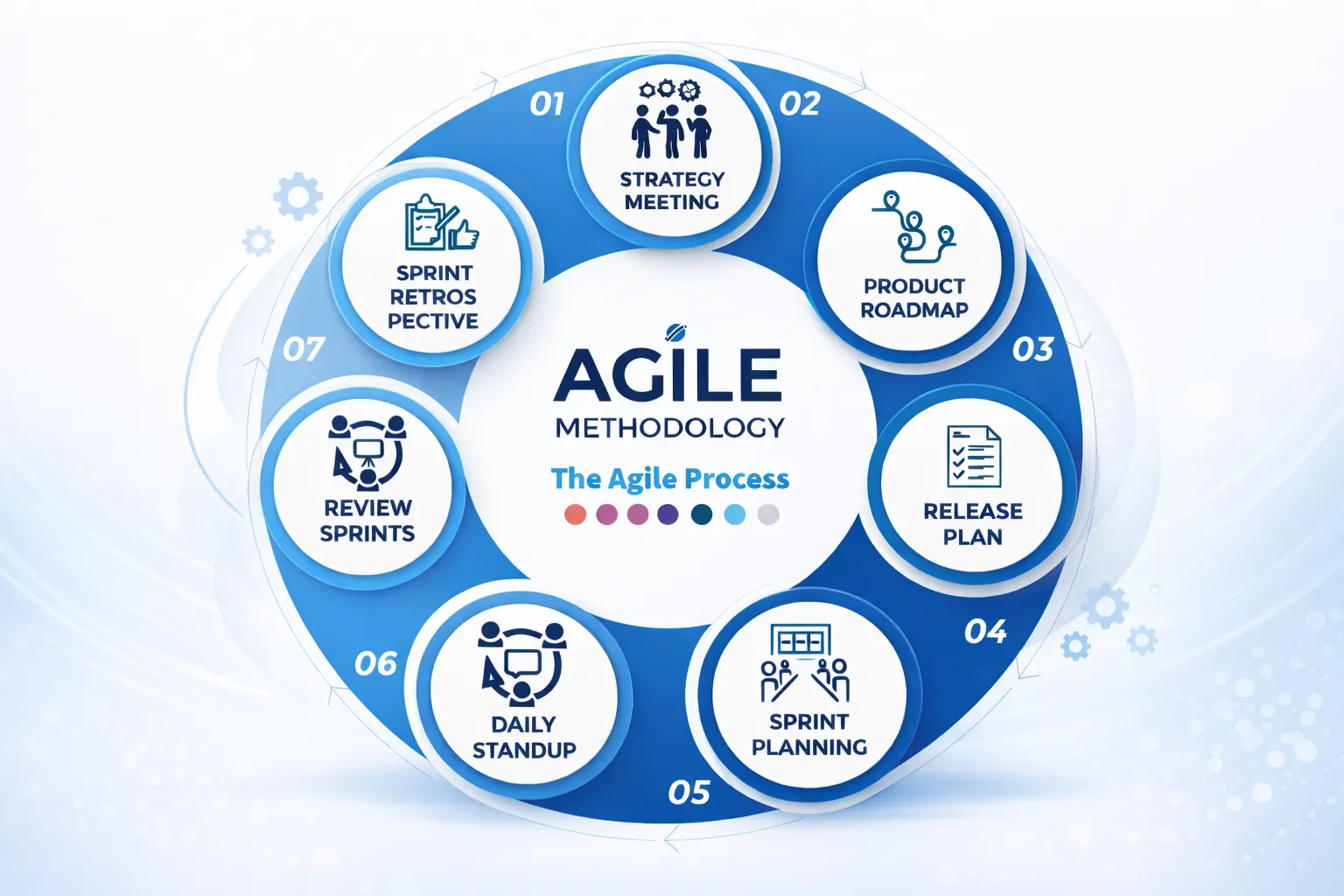
The course begins with the Agile Manifesto and its 12 principles, helping you understand the philosophy behind modern teamwork. You will then explore Scrum in depth, including the responsibilities of the Product Owner, Scrum Master, and Development Team. You will also learn how to conduct Sprint Planning, Daily Standups, Sprint Reviews, and Retrospectives effectively.
A major highlight of this course is learning how to write powerful user stories, prioritise backlog items, and estimate work using story points and planning poker. We also introduce Kanban fundamentals, WIP limits, workflow visualisation, and how Agile teams improve continuously using flow metrics.
Each module contains structured lessons, real-life examples, simple activities, and templates to make learning interactive and actionable. Whether you are preparing for a career in Agile, managing teams, or simply improving your project skills, this course gives you a strong foundation to work confidently in Agile environments.
By the end of this certification, you will be able to apply Agile principles at work, participate effectively in Scrum ceremonies, write user stories, run simple sprints, and support your team with a continuous improvement mindset.
Requirements

FAQ
Check the frequently asked questions about this course.
Curriculum Overview
This course includes 10 modules, 12 lessons, and 3:25 hours of materials.
Agile is a mindset focused on delivering early value, adapting to change, and learning fast.
The Agile Manifesto emphasizes people, working products, collaboration, and responding to change.
Agile reduces late risk, enables faster feedback, and suits work with uncertainty.
Small experiments + continuous improvement = core of Agile.
Video Lesson
Scrum is a lightweight Agile framework designed for iterative & incremental delivery.
The Sprint is the central heartbeat of Scrum.
Scrum stands on 3 pillars (Transparency, Inspection, Adaptation) and 5 values.
Scrum helps teams deliver faster, adapt quickly, and collaborate better.
Each sprint ends with a working increment — something that provides value.
In one line:
👉 Scrum helps teams deliver small working value fast — and improve every cycle.
Scrum has 3 roles: PO, SM, and Developers — nothing extra.
Product Owner = value, backlog, vision
Scrum Master = coaching, facilitation, team performance
Developers = creating working increments
Every role contributes differently but equally to success.
Good roles → clear communication → fast delivery → high-quality increments.
In one line:
👉 Scrum succeeds only when each role understands its responsibilities clearly.
Scrum ceremonies maintain alignment, transparency & continuous improvement.
Each ceremony has a fixed purpose and timebox.
Sprint Planning defines the work → Daily Scrum tracks progress → Review gets feedback → Retrospective improves the process.
Strong ceremonies lead to predictable delivery and fast learning.
In one line:
👉 Scrum ceremonies create healthy rhythm, transparency, and continuous improvement inside every sprint.
Scrum artifacts = Product Backlog, Sprint Backlog, Increment.
User Stories describe what user needs & why.
INVEST ensures quality stories.
Acceptance Criteria remove ambiguity.
DoR ensures story readiness; DoD ensures completeness.
Good stories → better sprints → better products.
In one line:
👉 Good user stories with clear acceptance criteria drive successful sprints.
Estimation in Agile uses story points, not hours.
Story points measure complexity, not time.
Planning Poker builds consensus and avoids bias.
Velocity = story points completed per sprint.
Velocity helps forecast future work realistically.
AI supports story refinement, estimation, and risk guidance.
In one sentence:
👉 Agile estimation makes planning realistic, collaborative, and based on team learning — not guesswork.
Kanban is a visual system for managing & improving workflow.
Work is continuous, not sprint-based.
WIP limits improve focus and reduce multitasking.
Flow metrics help teams predict delivery timelines.
Kanban applies across IT and non-IT industries.
AI enhances mapping, bottleneck detection, and WIP recommendations.
In one line:
👉 Kanban improves workflow efficiency and reveals bottlenecks so teams deliver faster with less effort.
Agile is used across software and non-software industries.
Most teams use hybrid models (Scrum + Kanban).
Real-world Agile requires culture, communication, and discipline.
Common challenges come from misunderstanding roles or forcing Agile rituals.
AI now plays a big role in backlog refinement, sprint planning, retrospectives, and forecasting.
In one sentence:
👉 Agile succeeds in the real world when teams focus on value, collaboration, and continuous learning — not rigid processes.
AI enhances speed, clarity, and efficiency in Agile teams.
Product Owners use AI for stories, criteria, and roadmaps.
Scrum Masters use AI for retros, blockers, coaching.
Developers use AI for tasks, test cases, and documentation.
AI improves estimation, planning, and sprint reviews.
KnowVantage stands out by teaching modern Agile with AI.
In one sentence:
👉 Agile teams using AI learn faster, plan better, communicate clearly, and deliver value more consistently.
Course Certificate
This Course Includes
Course Specifications
Get Free Lean Six Sigma Resources and Career Tips


