

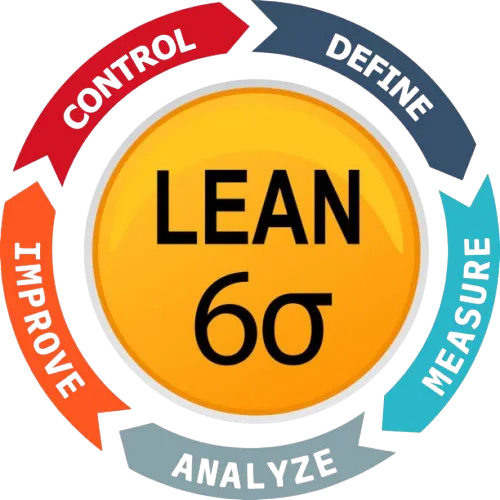

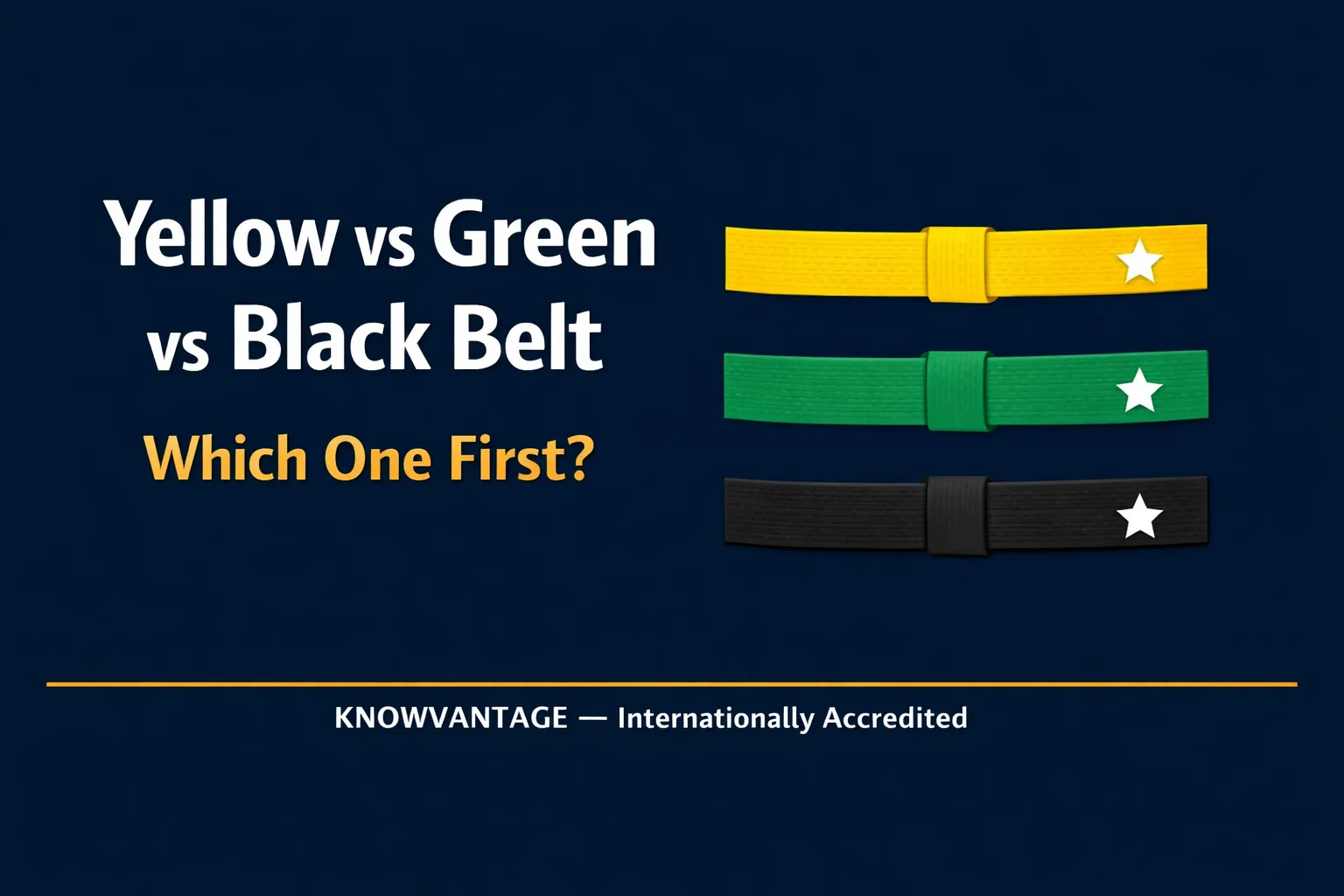

The most common question Knowvantage gets from professionals considering Lean Six Sigma is this: which belt should I start with? The answer depends entirely on where you are in your career right now — not on which certificate sounds most impressive.
Key Takeaways
- Yellow Belt is awareness-level — good for team members who support LSS projects but do not lead them
- Green Belt is the most practical starting point for 90% of working professionals in India
- Black Belt is a full-time improvement career — not a step up from Green Belt unless you are ready to commit to it
- The wrong belt choice wastes 3-6 months and Rs.30,000-Rs.80,000 — this guide prevents that
- India's job market rewards Green Belt + completed project more than any other combination at entry to mid level
Why Belt Choice Matters More Than Most People Realise
Lean Six Sigma has four belt levels — Yellow, Green, Black, and Master Black Belt. Each one is a different level of commitment, depth, and career positioning. Choosing the wrong one does not just waste money — it puts you in a certification that does not match your role, your experience, or what the market will pay you for.
The most common mistake Indian professionals make is assuming they should start with Yellow Belt because it sounds like the logical first step. It is not — for most working professionals with 2 or more years of experience, Yellow Belt is too basic to drive a meaningful salary change or career shift.
The second most common mistake is jumping straight to Black Belt without Green Belt experience or project work — which sets candidates up to fail both the exam and the job interviews that follow.
Yellow Belt — What It Is and Who It Is Actually For
A Yellow Belt is a foundation-level awareness certification. It teaches you what Lean Six Sigma is, how DMAIC works at a conceptual level, and how to support a Green Belt or Black Belt who is running a project. You do not lead projects at Yellow Belt level.
Yellow Belt Is Right For You If:
You are a fresher or have less than 1 year of work experience and want to understand LSS before committing to a full program. Or your company is running a Lean Six Sigma initiative and your manager wants the entire team to understand the basics. Or you are in a support function — HR, finance, admin — and need awareness rather than project leadership skills.
Honest Assessment
Yellow Belt alone will not get you a promotion or a higher offer in India's job market. Hiring managers treat it as baseline awareness, not a differentiating credential. If your goal is career advancement or salary growth, Yellow Belt is a stepping stone at best — not a destination.
Green Belt — The Practical Career Accelerator
A Green Belt is a mid-level practitioner certification. You are trained to lead full DMAIC projects within your own function, using statistical tools, data analysis, and structured problem-solving. You spend roughly 25-50% of your time on improvement work while continuing your regular role.
This is the most in-demand certification in India's job market right now. Manufacturing, IT, pharma, BFSI, and healthcare companies actively hire at this level. It is the sweet spot — enough depth to deliver real results, flexible enough to combine with any operational role.
Green Belt Is Right For You If:
You have 1-2 or more years of work experience in any operational, quality, IT, or service role. You want a salary jump of 25-40% within 6-12 months. You want to solve real problems in your current organization and make your results visible to leadership. You are in manufacturing, IT, pharma, BFSI, or healthcare — the five highest-hiring sectors for LSS in India.
What Makes a Green Belt Program Worth Paying For
The difference between a Rs.20,000 online course and a Rs.60,000 program from Knowvantage is not the certificate — it is the live project mentoring. Any program that does not support you through a real DMAIC project is selling you awareness, not capability. Knowvantage's Green Belt program includes expert-guided project support because that is what the job market actually rewards.
Black Belt — The Full-Time Improvement Professional
A Black Belt is not just a harder version of Green Belt. It is a different career track. Black Belts work full-time on large, cross-functional improvement projects. They coach Green Belts, report directly to senior leadership, and are accountable for organization-wide improvement results. Most Black Belt roles in India come with a dedicated headcount and a savings target — typically Rs.1-5 crore per year.
Black Belt Is Right For You If:
You already have Green Belt certification and have completed at least one live DMAIC project. You have 4 or more years of operational experience. You want to move into a full-time quality or process excellence role. You are targeting Rs.15 LPA+ and are prepared for a longer, more demanding certification program. Your organization is ready to give you dedicated improvement responsibilities.
The Most Common Mistake With Black Belt
Professionals with no Green Belt experience jumping straight to Black Belt because it sounds more impressive. Black Belt training assumes Green Belt knowledge as a foundation. Without it, the exam pass rate drops sharply and the project work becomes extremely difficult. Do Green Belt first. Do it properly. Then Black Belt becomes a natural and much easier progression.
Side-by-Side Comparison Table
| Factor | Yellow Belt | Green Belt | Black Belt |
|---|---|---|---|
| Role | Project supporter | Project leader | Full-time improvement professional |
| Training Duration | 2-3 days | 6-8 weekends | 4-6 months |
| Project Required | No | 1 live project | 2 completed projects |
| Statistics Depth | Basic awareness | Intermediate | Advanced |
| India Salary Range | Rs.3.5-6 LPA | Rs.6.5-18 LPA | Rs.12-35 LPA |
| India Market Demand | Growing | Very High | High — acute shortage |
| Prerequisite | None | None (IASSC) | Green Belt preferred |
| Knowvantage Recommendation | Starting point only | Start here for most professionals | After Green Belt + 1 project |
The 60-Second Decision Guide — Which Belt Is Yours?
Choose Yellow Belt if:
You are completely new to Lean Six Sigma, have less than 1 year of work experience, or your company simply needs team-wide LSS awareness as part of a larger initiative. Yellow Belt is a foundation — treat it as one.
Choose Green Belt if — and this covers most of you reading this:
You have 1 or more years of work experience in any operational role. You want to see a salary jump within the next 6-12 months. You work in manufacturing, IT, pharma, BFSI, or healthcare. You want a credential that hiring managers in India immediately recognize and value. You are ready to complete a real project — not just clear an exam.
Choose Black Belt if:
You already have Green Belt certification with at least one completed DMAIC project. You have 4 or more years of operational experience. You want to move into a full-time process excellence or quality leadership role. You are targeting Rs.15 LPA and above and are prepared for the deeper statistical and project requirements.
Real Example — Getting the Belt Choice Right
Rajesh, a 4-year operations executive at a Bengaluru IT company, came to Knowvantage considering Black Belt because he wanted the highest credential. After a 30-minute consultation we recommended Green Belt first — because he had no LSS project experience and Black Belt training would have been extremely difficult without the foundation.
He completed Green Belt in 4 months, ran a project that reduced SLA breach rate from 18% to 4%, saved his company Rs.22L annually, and received a promotion to Process Excellence Lead at Rs.13 LPA — up from Rs.8.5 LPA. He is now enrolled in Knowvantage's Black Belt program with a strong foundation and a project portfolio that will make the next level significantly easier.
Frequently Asked Questions
Not Sure Which Belt Is Right for You?
Book a free 30-minute consultation. We will look at your background, your industry, and your career goal — and tell you exactly which belt gives you the fastest, most practical return.
Book a Free ConsultationDownload Free Belt Comparison Guide


Reply to Comment